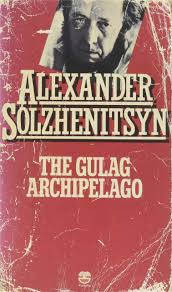
Out of concern for a socialist/communist trend in our country I decided to read The Gulag Archipelago, a big, fat book that has been sitting on my shelf for years. It is 620 pages—I checked more than once.
“How do people get to this clandestine Archipelago? …Those who, like you and me, dear reader, go there to die, must get there solely and compulsorily via arrest.”
The author, Aleksandr I Solzhenitsyn, was arrested during WWII for expressing ‘political’ concerns in some letters that he wrote. He was sentenced to 8 years for ‘counterrevolutionary activity.’
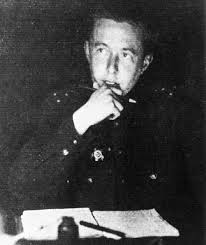
The book describes in detail various arrests, the methods used to extract confessions, the conditions in the prisons, the trials (mostly sham) and experiences of those who were processed through the system. It is not an easy read, but, Solzhenitsyn is a brilliant writer—and kudos to the translator, also brilliant. Though sometimes I got lost in names and places, I stayed engaged.
Through the years there were distinct waves of arrests and executions—early revolutionaries now deemed threatening, the ‘intelligentsia’, returning Prisoners of War at the end of WWII (they could have seen what life was like in the West), engineers, church people. After all, from the 1920s through the mid-1950s, some 18 million people were incarcerated in the Gulag system.
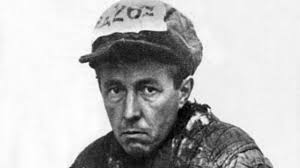
False accusations became a lifeline for feeding the hungry beast. Any voice raised against the prevailing, communist, Stalinist regime was quickly consumed.
“It has been explained to us that the heart of the matter is not personal guilt, but social danger. One can imprison an innocent person if he is socially hostile.” (page 282)
According to many, anyone who voted for Trump is socially hostile. A California Democrat Party official, David Atkins, wrote in a Tweet on November 17, “No, seriously, how ‘do’ you deprogram 75 million people? We have to start thinking in terms of post-WWII Germany or Japan…”
So, there is no point, according to this guy, in finding common ground, or trying to understand the values that caused people to vote for Trump. Deprogram. As someone who does not appreciate Trumps bluster and egotism, but who highly values many of the policies he championed, I find that to be terribly arrogant.
I don’t believe anyone has been imprisoned yet for simply supporting Trump, but Alexandria Ocasio-Cortez suggests making a list: “Is anyone archiving these Trump sycophants for when they try to downplay or deny their complicity in the future?” It is shocking that such a thing could be said by a Congresswoman in the United States.
Solzhenitsyn wrote, “The Revolution had hastened to rename everything, so that everything would seem new. Thus the death penalty was re-christened ‘the supreme measure’ –no longer a ‘punishment’ but a means of social defense.” (page 436)
Just recently the definition of bigot was changed in an on-line dictionary. One day it was this, “a person who is intolerant toward those holding different opinions”, now it is this, “a person who is obstinately or unreasonably attached to a belief, opinion, or faction, especially one who is prejudiced against or antagonistic toward a person or people on the basis of their membership of a particular group.” So now, if you are part of a Biblically based church that holds to traditional beliefs about, say, marriage, or, perish the thought—homosexuality– you are a bigot. I happen to be ‘obstinately attached’ to the belief that the Bible is relevant and true, and I go to a church that loves people unreservedly, but holds—I guess ‘unreasonably’ to some—to the values it teaches.
Just one more quote, and its’ relevance to the current cultural clash in the United States today.
“True, we have taught ourselves to ridicule our past; we never acknowledge a good deed or a good intention in our history.” (page 432)
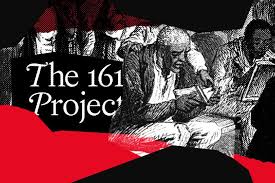
This trend to disregard all the good because of the imperfections of our national history is destructive, and I suspect purposefully promoted by those who want to ‘fundamentally change’ our nation. It is a crafty tactic because it works. There are some young adults in my life who have been poisoned by this.
The Gulag Archipelago is an austere warning. Thank God, we are nowhere near this kind of extreme social engineering, but I wonder what Solzhenitsyn would say about the United States today.
 Odom's Odyssey
This review is excellent! I didn’t know about the changing definition of bigot, that’s amazing!
LikeLike